What Lockdown Taught Us About Dating (And What Still Applies in 2026)

Looking back from 2026, the lockdown years clarified something fundamental about connection: what screens can and cannot replace, what isolation reveals about what people actually want, and which skills only develop in person. Here are the lasting lessons.
It is strange to look back on the lockdown years now. At the time they felt permanent — a new normal that we had to adapt to indefinitely. In hindsight they were a compressed, disorienting period that accelerated some long-running changes in dating culture, created others from scratch, and, perhaps most usefully, clarified something fundamental about what human connection actually requires.
This is not a piece about how to date during a pandemic. That chapter is closed. What follows is an honest reflection on what the lockdown era revealed, what it changed permanently, and what it confirmed about the kind of skills that matter in dating — regardless of circumstances.
The In-Person Connection Gap Became Undeniable
For years before lockdown, there had been a creeping sense that dating apps and digital communication were replacing the need for genuine social skill. Why approach someone in person when you could match with them from your couch? Why develop conversational presence when you could carefully compose a message and wait for a response?
Lockdown answered that question definitively. When in-person interaction disappeared entirely, the results were stark. Loneliness spiked. Relationships formed purely online stalled or collapsed the moment they had to exist in physical space. People who had told themselves they were happy homebodies discovered they were miserable without genuine social contact. The fundamental human need for physical presence — for the micro-signals exchanged in a real conversation, for the energy of being in the same room as someone — turned out to be non-negotiable.
In Melbourne, which endured the longest lockdowns in the world, exceeding 260 days across multiple stints, this reality hit hardest. A city that ran on social spontaneity — the world-class cafe culture, the bar laneways, the impromptu encounters — was reduced to a five-kilometre radius and a single hour of outdoor exercise. The psychological toll was real. The dating toll was real. And when restrictions finally lifted, the relief people felt simply walking into a room full of strangers confirmed what lockdown had suppressed: nothing replaces being physically present with another person.
Online Dating Skills Developed — But Only the Technical Ones
The lockdown period did accelerate genuine skill development in one area: online dating profiles and initial digital communication. With nothing else available, people invested more seriously in their app presence. They took better photos. They thought harder about how to present themselves in a bio. They got sharper at opening messages and keeping early text conversations alive.
Those skills are worth keeping. A well-constructed profile and the ability to write an engaging first message remain genuinely useful in 2026. The apps are not going anywhere, and the competition on them has not decreased.
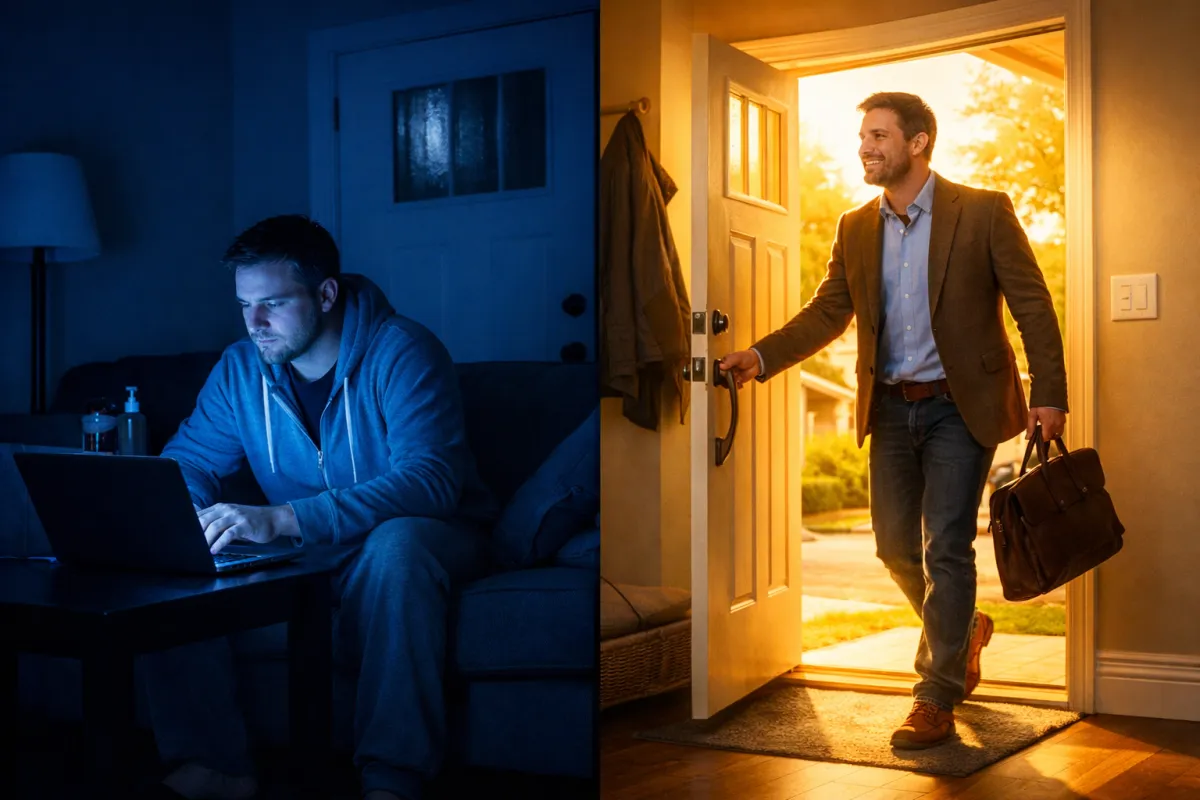
But the lockdown era also produced a cohort of men who had become highly competent at the digital layer of dating while their in-person skills atrophied from disuse. They could match, message, and arrange a date. Then they would sit down across from someone in real life and discover they had no idea how to hold a conversation, read the room, or create the kind of physical presence that makes an encounter feel alive rather than like a job interview.
This gap — digital fluency without social fluency — is one of the defining coaching challenges of the post-lockdown years. It is also entirely fixable, but it requires acknowledging that the skills you practise through a screen are categorically different from the ones you develop face-to-face.
Isolation Revealed What People Actually Want
One of the more unexpected effects of extended lockdown was that it forced people into genuine introspection about their romantic lives. With the noise removed, the options narrowed, and the normal distractions unavailable, many people confronted questions they had been successfully avoiding.
What became clear for a significant number of people — men in particular — was that they had been treating dating as a performance rather than a genuine search for connection. The energy that had gone into strategies, openers, and tactics suddenly had nowhere to go. And in that quiet, many people realised they did not actually know what they wanted from a relationship, why they wanted it, or what kind of person they were when the social performance was stripped away.
That confrontation was uncomfortable. It was also useful. The men who used lockdown well came out the other side with a clearer sense of what they were actually looking for. They had done the internal work that most people avoid because they are too busy cycling through dates and distractions. That clarity — knowing what you want and why — turns out to be one of the most quietly attractive qualities a person can carry. It is also something no app feature can substitute for.
The Social Skills You Cannot Practise Through a Screen
Here is what the lockdown years made concrete: there is a category of social skills that can only be developed through repeated, real-world, in-person interaction. No amount of video calling, app messaging, or online socialising builds them. They include:
- Reading physical signals and adjusting your approach in real time
- Managing the anxiety of approaching someone you do not know
- Holding genuine conversational presence without the safety net of a delay before responding
- Creating the physical ease and warmth that makes someone feel comfortable with you
- Recovering gracefully from an awkward moment or a misread
These are not minor refinements. They are the core of what makes someone attractive and enjoyable to be around. And for a significant cohort of men who spent their late teens or early twenties in and out of lockdown, they were never properly developed in the first place.
This is not a criticism — it is a structural reality of what that period produced. The good news is that these skills are learnable at any age, in any city, with the right kind of deliberate practice. Working with our dating coaches accelerates that process considerably, but the first step is simply accepting that the practice has to happen in person, in real social environments, not on a screen.
How the Dating Landscape Changed After Lockdown
The post-lockdown dating landscape looks different from what came before, and understanding those differences matters if you are trying to navigate it well.
App fatigue is real and widespread. After years of dating apps being the only option available, many people emerged from lockdown genuinely burnt out on swipe-based interaction. There has been a sustained shift toward in-person meeting, social events, and organic connection. The apps still have volume, but the emotional energy people bring to them has changed. More people are using them as one tool among several rather than the primary avenue.
The re-emergence of social sport, interest groups, and community events has been significant. People who spent years being forced apart developed a genuine appetite for belonging and shared experience that apps never satisfied. Running groups, tennis clubs, climbing gyms, trivia nights, and similar venues have seen sustained growth since lockdown ended. These environments remain some of the best places to meet people in 2026, precisely because the interaction is grounded in something real rather than a carefully curated digital front.
There is also a broader cultural shift in how people talk about what they want. The vulnerability that lockdown produced — and the clarity that followed — has made many people less willing to perform indifference. The ironic detachment that once dominated early-stage dating culture has worn thin. In its place, a more direct and honest register is emerging. People who can meet that shift — who can be genuine without being needy, clear without being intense — are finding the post-lockdown landscape considerably more rewarding.
What to Take Forward
The lockdown years were genuinely difficult. That deserves to be said plainly before drawing lessons from them. Many people lost significant time, relationships, and opportunities during that period. The point of reflecting on it is not to find a silver lining in something that was simply hard. It is to extract what is actually useful and carry it forward.
What is useful: the clarity about what in-person connection provides that nothing else can. The online skills that genuinely transferred. The self-knowledge that introspection under pressure produced. The recognition that social skills are learnable and that the gap created by years of forced isolation can be closed with deliberate practice.
What to leave behind: the habits of avoidance and digital substitution that lockdown normalised. The idea that practising connection through a screen is equivalent to practising it in person. The false comfort of staying in the digital layer because it feels safer than the real world.
The dating landscape in 2026 rewards the same things it always has — just with less patience for pretence. Show up in person. Develop the skills that only come from practice. Know what you are actually looking for. The rest follows from there.
Ready to put this into practice?
Book a free 45-minute coaching call with our team. Get personalised advice on your dating life. No obligation, no pressure.

 4.9 stars · 160+ reviews
Andrew Gung
The CEO and founder of Core Confidence, Andrew and has been studying, applying, and teaching the skills to develop real, meaningful relationships with incredible people over the last decade.